Case 02 · Photo to 3D
Three Views to a Real-Time 3D Object
A pass-gated reconstruction workflow for turning front, side, and back views into a textured real-time object.
Delivery Loop trail
Four gates connect the problem to public proof.
Each gate records the evidence that justified moving forward.
Understand
- Three sparse reference views
Design
- Alignment and projection contract
Deliver
- Procedural sphere and PBR maps
Verify
- Three-view QA and public GLB
01 · Operational problem
Can three product views become a credible real-time object?
Sparse views hide the poles, opposite side, true curvature, and material response. A convincing render is not enough unless those inferences remain visible.
02 · Product hypothesis
A bounded projection workflow could make uncertainty inspectable.
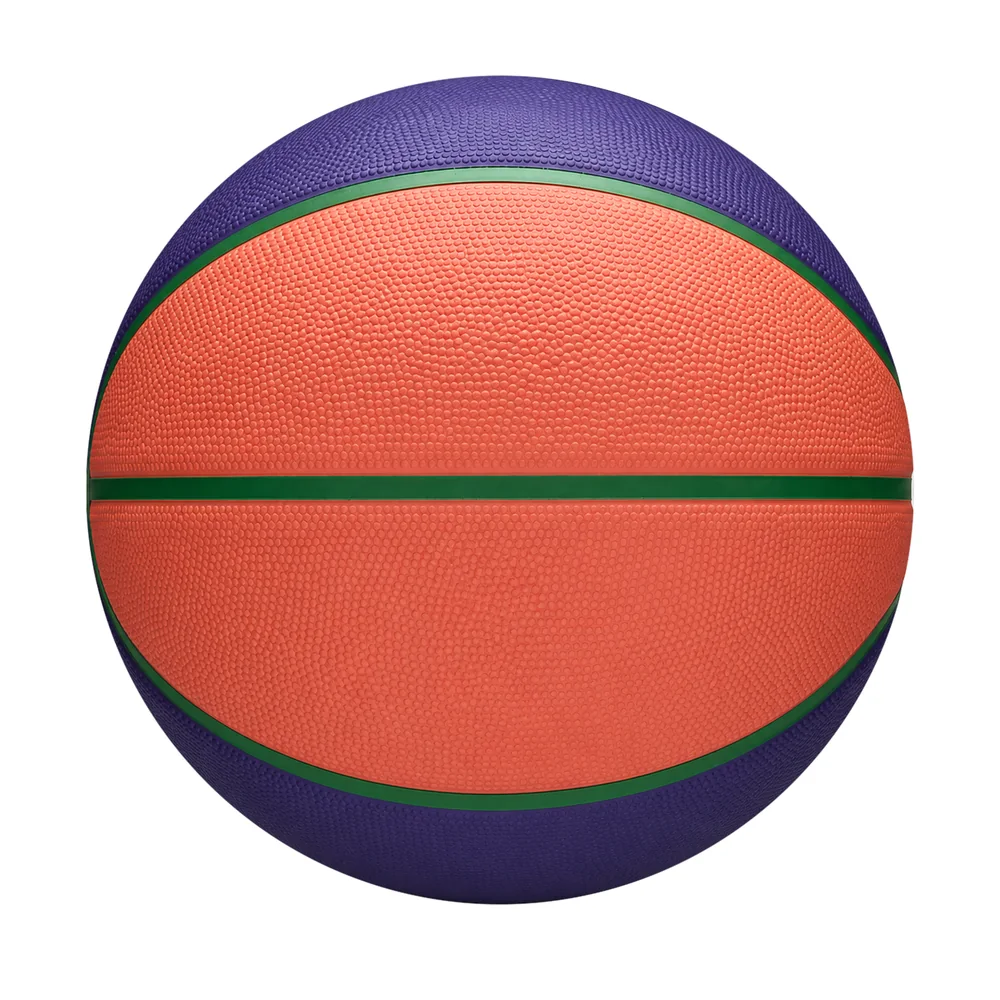
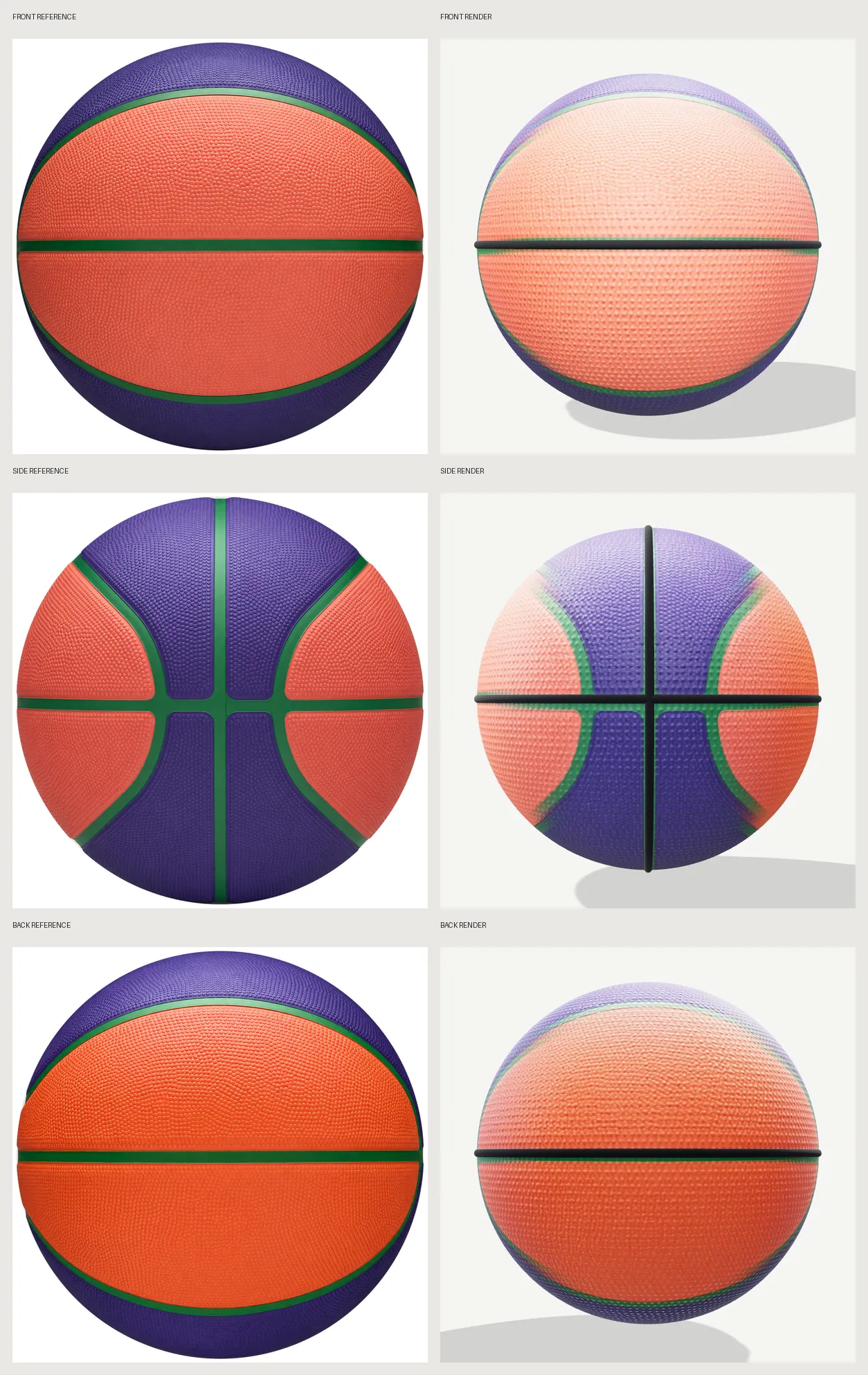
Align each view, project artwork onto a procedural sphere, build independent PBR channels, then review the same named views used as input.
03 · Technical path
Geometry, channels, and artwork were solved as separate layers.
A procedural sphere carries channel geometry and pebble relief while view-aligned textures produce albedo, roughness, normal, and ambient-occlusion maps.
04 · AI delivery
Exploration became a reusable reconstruction Skill.
The standardized run encoded alignment, map generation, GLB export, browser validation, and pass gates instead of repeating ad hoc instructions.
05 · Real constraints
The missing views had to remain declared inference.
The opposite lateral side is mirrored at reduced confidence; top and bottom are multi-view projected inference. The public package excludes all earlier branded experiments.
06 · Verification
The public model failed its own visual threshold—and says so.
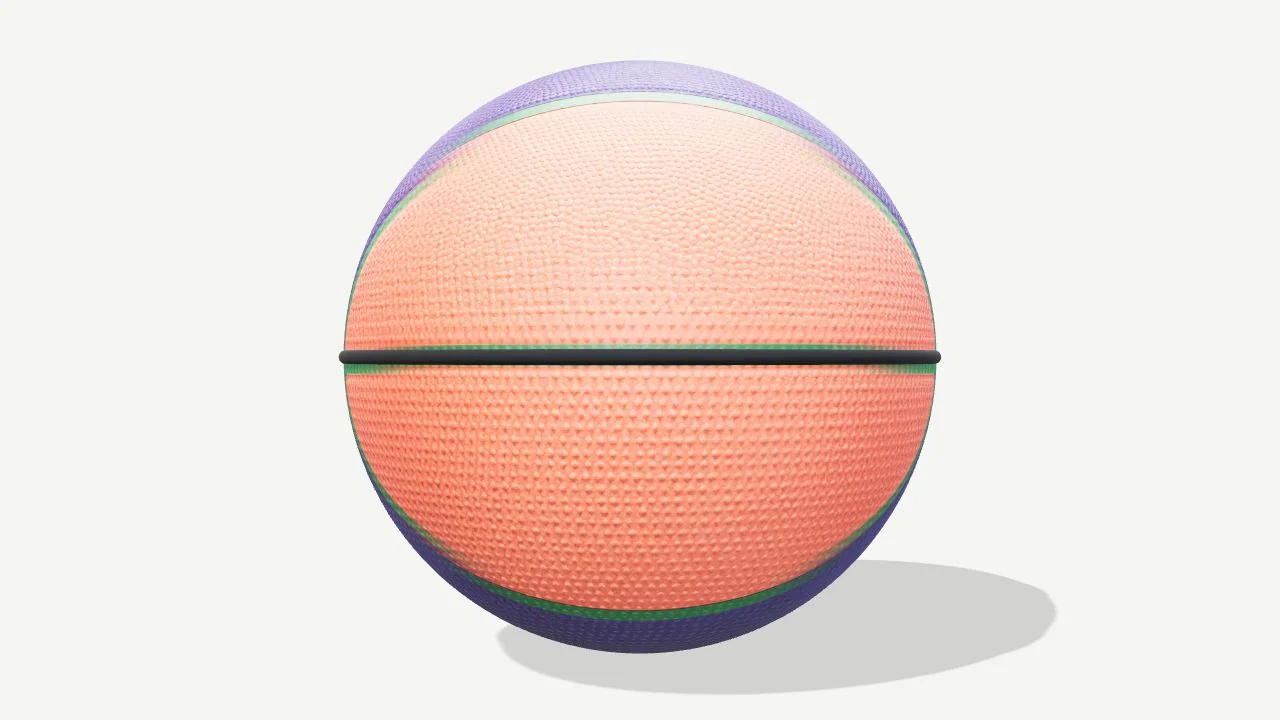
Front 0.79, side 0.78, and back 0.80 remained below configured thresholds despite passing GLB and runtime validation.
07 · Reusable capability
Standardization cut repeat work and allowance use.
The exploratory run took about 34 minutes and about 3% of a US$100 allowance; the standardized comparison took 339.63 seconds and less than 1%. This is workflow evidence, not a controlled model benchmark.
08 · Limits and public boundary
Public proof uses only the unbranded TEST4 asset.
Private repositories, branded experiments, their textures and models, and private URLs remain excluded. The downloadable GLB is the validated public artifact.
Related work
See the method move across domains.
The technology changes; the discipline around constraints and evidence remains.
Reusable lesson
A failed visual gate can be more useful than an unqualified success claim.
It shows exactly where the workflow is reusable and where more evidence is still needed.
A similar operational constraint?