Case 05 · Evidence to 3D
Fujiwara Tofu Shop: Evidence to Verified 3D
A reference-led reconstruction where geometry, materials, semantics, and browser delivery were verified separately.
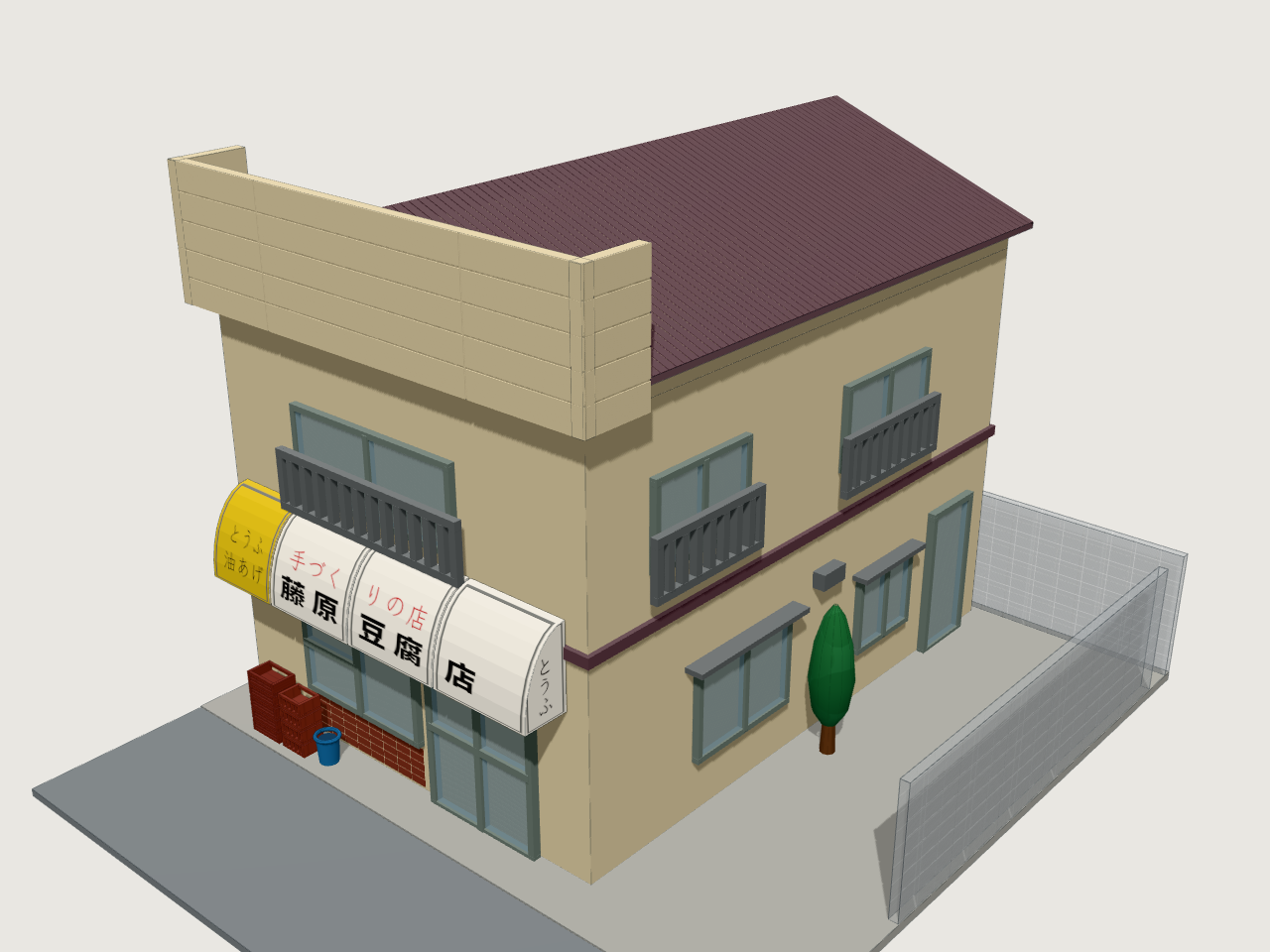
Delivery Loop trail
Four gates connect the problem to public proof.
Each gate records the evidence that justified moving forward.
Understand
- Mixed visual evidence
Design
- Parseable scene specification
Deliver
- Geometry and material freezes
Verify
- Six-view QA and GLB round trip
01 · Operational problem
Mixed visual evidence had to become one coherent, reviewable scene.
References disagreed in angle, scale, visibility, and detail. The work needed a way to separate observed facts from inferred geometry.
02 · Product hypothesis
A scene specification and named QA views could control drift.
Before modeling, evidence became dimensions, semantic parts, material intent, confidence, and camera views that both human and agent could review.
03 · Technical path
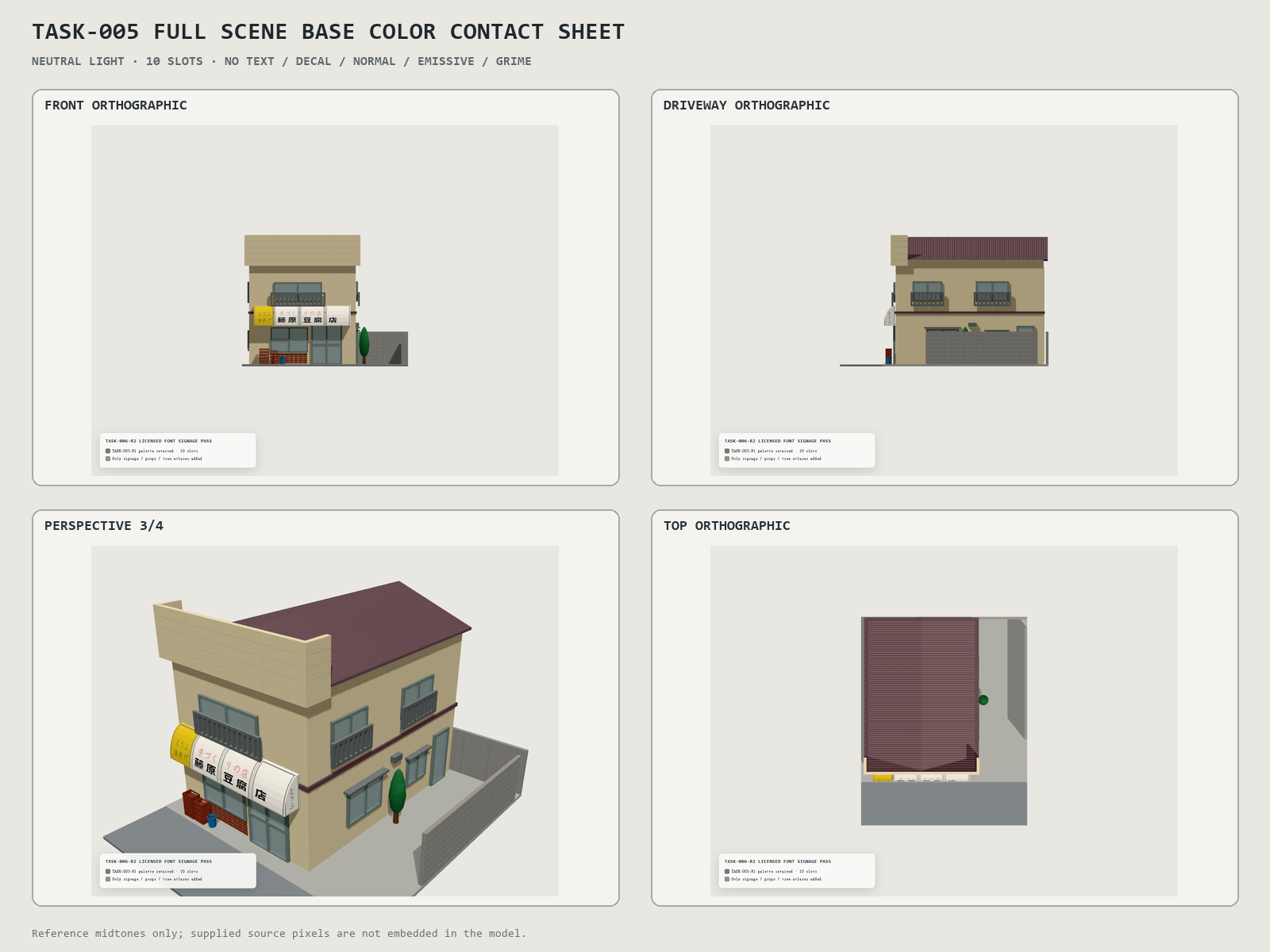
Orthographic alignment exposed errors before detail could hide them.
Front, driveway, opposite, back, top, and perspective views were used to correct bounded geometry before final material and signage work.
04 · AI delivery
Human judgment chose meaning; Codex implemented bounded corrections.
Semantic mistakes were treated as review failures. Geometry and visual milestones were frozen only after human comparison, not after code completion.
05 · Real constraints
The last visual refinements remained expensive.
Typography, grooves, brick relief, signage, and color hierarchy required taste and repeated visual comparison that automation could accelerate but not approve.
06 · Verification
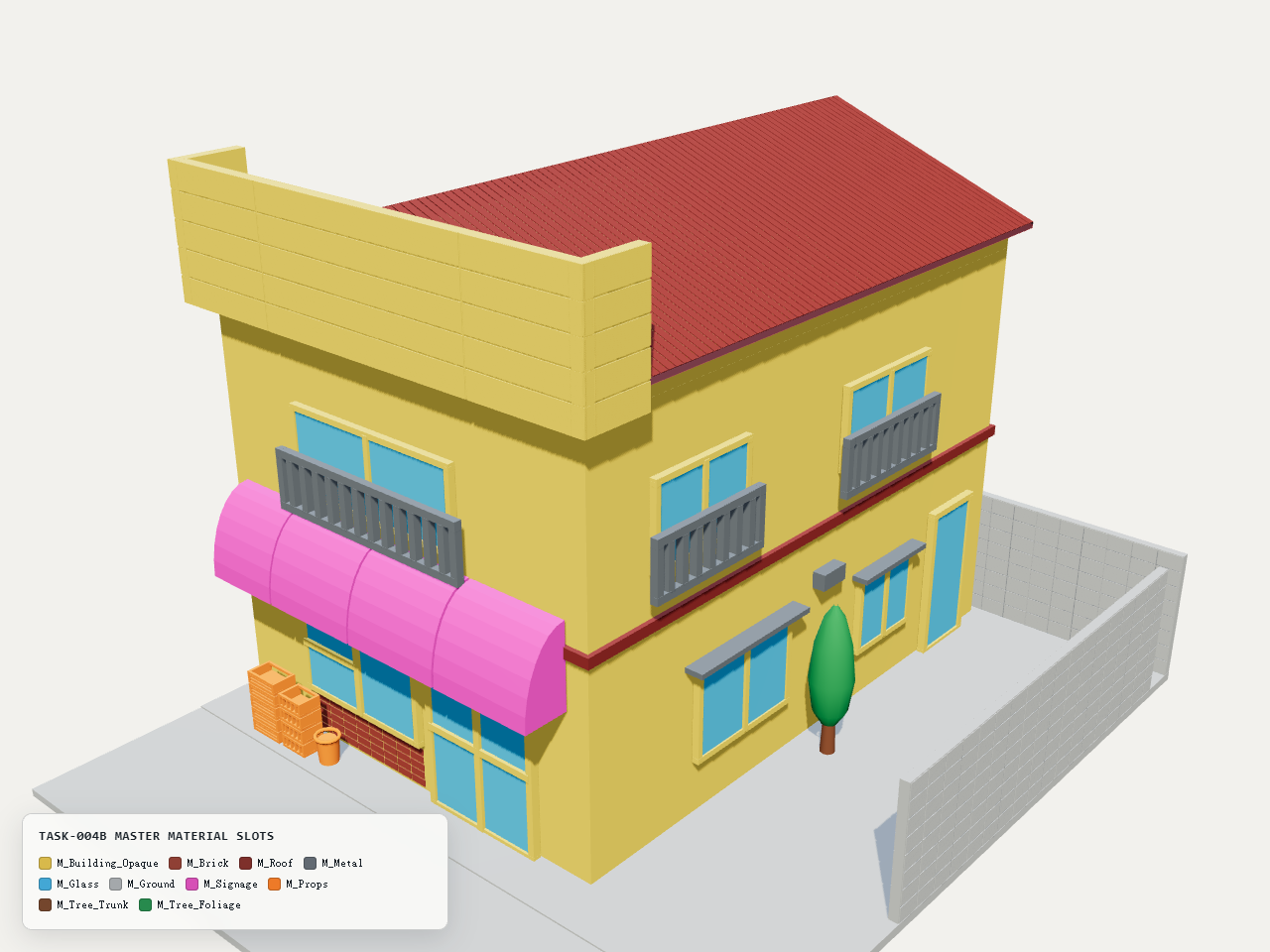
Geometry, materials, UVs, transforms, and browser behavior passed separate gates.
The public GLB contains 216 meshes, 10 materials, three textures, valid UVs and transforms, and no workstation extras metadata.
07 · Reusable capability
A frozen asset can support new presentation without being rewritten.
The approved GLB became an immutable input for a later exhibit, proving that presentation can branch from verification instead of mutating it.
08 · Limits and public boundary
This is an independent reconstruction, not an official manufacturer asset.
Original photographs, packaging, instruction imagery, private alignment overlays, source-evidence metadata, local paths, and the private repository remain excluded.
Related work
See the method move across domains.
The technology changes; the discipline around constraints and evidence remains.
Reusable lesson
Verification creates the freedom to present without losing the master.
The frozen GLB is both an outcome and a safe boundary for everything that follows.
A similar operational constraint?